Work Visas in the U.S.: Which One Might You Qualify For?
Work Visas in the U.S.: Which One Could You Qualify For?
U.S. work visas can be confusing for individuals and employers. This guide summarizes the main visa categories, who typically qualifies, and the basic application steps. Whether you’re a skilled professional, an intra‑company transferee, or a specialized worker, understanding eligibility and timing helps you plan. We cover H‑1B, L‑1, O‑1, and TN visas, explain how an employment-based green card lawyer can assist, and outline typical timelines so you can make informed next steps. For more information about our firm, visit Gorostiaga Law.
What Are the Main Types of U.S. Work Visas and Their Eligibility Criteria?
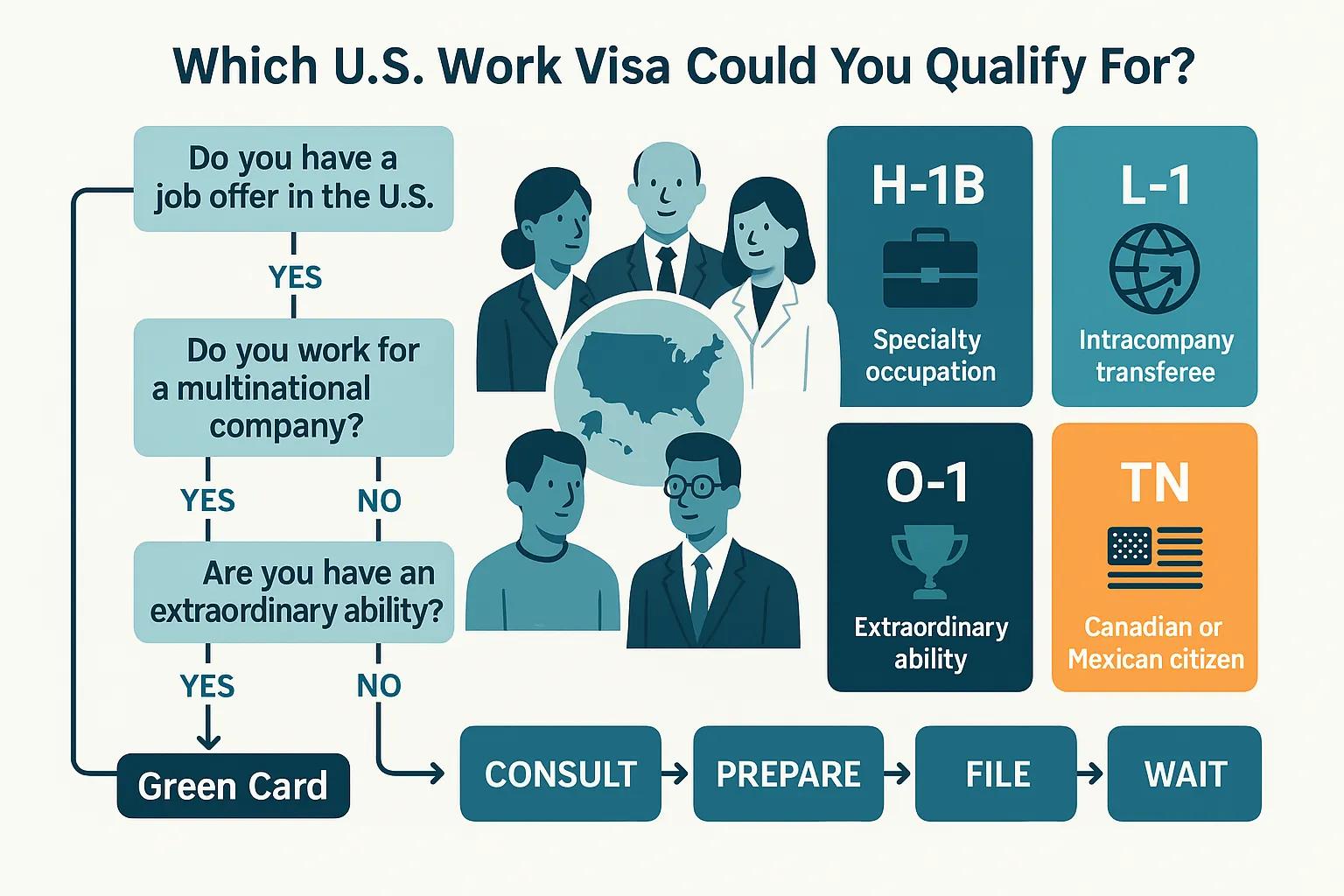
The U.S. offers several work visas for different job situations and qualifications. The most common include:
H-1B Visa: For skilled professionals in specialty occupations that usually require a bachelor’s degree or higher; a U.S. employer must sponsor the petition. According to USCIS data, approximately 85% of H-1B petitions are approved annually, reflecting its role as the primary visa for specialty occupations.
L-1 Visa: For intra‑company transfers to a U.S. branch, affiliate, or subsidiary; qualification depends on the corporate relationship and the employee’s work history. The Department of State reports that L-1 visas accounted for over 15,000 approvals in 2022, highlighting their importance for multinational companies.
O-1 Visa: For individuals with extraordinary ability in fields such as the arts, sciences, education, business, or athletics, supported by sustained recognition. The O-1 visa is often described by immigration experts as a critical option for top-tier talent, with approval rates exceeding 90% when strong evidence is provided.
TN Visa: Under USMCA, available to Canadian and Mexican citizens in specified professional occupations with a qualifying job offer. The U.S. Department of Homeland Security notes that TN visas facilitate thousands of cross-border professionals annually, streamlining work authorization for eligible applicants.
Visa TypeEligibility CriteriaKey FeaturesH-1BBachelor's degree or higherEmployer sponsorship required; subject to annual cap and lotteryL-1Employment with a multinational companyMust have worked for the company for at least one continuous year within the last three yearsO-1Extraordinary abilityRequires proof of significant achievements and sustained acclaimTNCanadian or Mexican citizenshipJob offer in a qualifying profession; streamlined application process
This table highlights core requirements so you can quickly see which visas fit your situation.
How Does the H-1B Visa Work for Skilled Professionals?

The H‑1B is a non‑immigrant visa allowing U.S. employers to hire foreign workers in specialty occupations. Qualification typically requires a relevant bachelor’s degree or equivalent experience. The employer files a Labor Condition Application (LCA) with the Department of Labor and then petitions USCIS. Initial H‑1B approval is commonly up to three years, with extensions often available up to six years depending on circumstances and any pending green card steps. According to the Migration Policy Institute, the H-1B visa program supports over 500,000 workers in the U.S., playing a vital role in sectors like technology, engineering, and healthcare.
Who Qualifies for L-1 Visas for Intra-Company Transfers?
The L‑1 visa lets multinational companies transfer eligible employees to a U.S. office. The employee must have worked for the company abroad for at least one continuous year in the last three years in a managerial, executive, or specialized‑knowledge role. L‑1s are useful for moving key personnel to support operations and continuity in the U.S. The U.S. Citizenship and Immigration Services (USCIS) notes that L-1 visa holders often transition to permanent residency, underscoring the visa’s strategic importance for global businesses. Learn more about our business immigration services.
How Can an Employment-Based Green Card Lawyer in New Jersey Assist You?
Immigration law is technical and detail‑driven. An employment-based green card lawyer can help choose the correct pathway, prepare petitions and evidence, meet deadlines, and reduce the risk of costly errors. As noted by the American Immigration Lawyers Association (AILA), legal representation significantly increases the likelihood of successful visa and green card applications. To learn more about our team, visit our About Us page or read about Virginia Gorostiaga, our lead attorney.
What Is the Process for Obtaining an Employment-Based Green Card?
The employment‑based green card process commonly follows these steps:
Initial Consultation: Assess your situation and possible pathways with an immigration attorney.
Eligibility Assessment: Identify the employment category that matches your qualifications and job offer.
Application Preparation: Gather supporting documents and complete required forms.
Filing the Application: Submit petitions and pay fees to USCIS as required.
Following this sequence keeps your case organized and reduces the chance of delays or requests for additional evidence. According to USCIS, the average processing time for employment-based green cards ranges from 8 months to several years depending on category and country of origin.
How Does Employer Sponsorship Impact Your Green Card Application?
Employer sponsorship is often essential for employment‑based green cards. The employer must demonstrate the ability to pay the offered wage and typically provide a permanent job offer. For categories needing labor certification, the employer must conduct recruitment to show no qualified U.S. workers are available. Employer support forms a central legal and evidentiary element of the petition. The Department of Labor’s prevailing wage and recruitment requirements ensure protection of U.S. labor market interests.
What Should You Know About O-1 and TN Visas for Specialized Workers?

O‑1 and TN visas address specialized qualifications. Knowing the distinct standards and evidence needed for each helps you choose the right path and build a persuasive case.
Who Is Eligible for the O-1 Visa for Extraordinary Ability?
The O‑1 is for individuals with extraordinary ability demonstrated by sustained national or international recognition. Acceptable evidence includes awards, published work, critical roles, and other documented achievements. It suits leading professionals across science, arts, education, business, and athletics seeking temporary U.S. work. According to USCIS, O-1 visa petitions have a high approval rate when supported by strong documentation, making it a preferred option for distinguished professionals.
What Are the Requirements for the TN Visa Under NAFTA/USMCA?
The TN visa permits Canadian and Mexican citizens to work in specified professions under USMCA. To qualify, you must have a job offer in an eligible occupation (for example, engineers, accountants, or many healthcare roles) and show proof of citizenship and the required credentials. The TN process is typically more streamlined than many other work visas. The U.S. Customs and Border Protection reports that TN visa applications are processed quickly at ports of entry, facilitating efficient cross-border employment.
How Does the Work Visa Application Process and Timeline Affect You?
Processing times and steps vary by visa and case. Timing can affect your start date, travel, and broader immigration plans, so build buffers into schedules and plan well ahead. USCIS processing times fluctuate based on workload and policy changes, so staying informed is critical.
What Are the Key Steps in Applying for a U.S. Work Visa?
Most applications follow core steps:
Determine Visa Type: Select the category matching your job and qualifications.
Gather Documentation: Collect education records, employment letters, and supporting evidence.
Submit Application: File the petition with USCIS and pay required fees.
Attend Interview: Some visas require consular interviews or in‑person appointments.
How Long Does It Typically Take to Process Different Work Visas?
Times vary: H‑1B can be delayed by the annual cap and lottery, though premium processing is available for some petitions. L‑1 and O‑1 petitions sometimes move faster, but all timelines depend on USCIS and consulate workloads. Expect possible delays and plan accordingly. For example, premium processing can reduce adjudication time to 15 calendar days for certain visa categories.
If you want tailored help, Gorostiaga Law Firm specializes in business immigration and can advise individuals and employers on next steps. We also offer services in family immigration, asylum and refugee law, citizenship and naturalization, DACA, and deportation defense. Contact us anytime through our contact page.
Frequently Asked Questions
What is the difference between a non-immigrant work visa and an immigrant visa?
A non‑immigrant work visa allows temporary work in the U.S. under specific conditions tied to a job or employer. An immigrant visa (green card) grants permanent residency and the right to live and work indefinitely. Non‑immigrant and immigrant pathways are separate and have different requirements. According to USCIS, non-immigrant visas are typically valid for a limited duration, while immigrant visas lead to lawful permanent residency.
Can I switch employers while on a work visa?
It depends on the visa. H‑1B holders can generally change employers, but the new employer must file an H‑1B petition (often called “porting”). Do not start a new job until the required filing or approval is in place for your category. The American Immigration Council emphasizes the importance of maintaining lawful status during employer changes.
What happens if my work visa application is denied?
A denial will include a reason. Often issues are missing documents or not meeting eligibility. Depending on the cause, options include appeal, a motion to reopen, or reapplying with corrected evidence. An immigration attorney can advise the best course. USCIS data shows that legal representation improves chances of successful appeals or reapplications.
How can I extend my work visa?
Your employer typically files a new petition with USCIS before your current status ends. Provide supporting documents that show continued eligibility and start the extension process early to avoid gaps. Extension rules differ by visa type. For example, H-1B extensions beyond six years are possible if a green card process is underway.
Are there any age restrictions for applying for a work visa?
Most U.S. work visas have no formal age limits; eligibility is based on meeting education and professional requirements. For instance, H‑1B applicants normally need a bachelor’s degree or equivalent experience, which implies a typical age range but not a strict upper limit. The U.S. Department of State confirms that age is not a disqualifying factor for work visa eligibility.
What should I do if my work visa is about to expire?
If your visa is nearing expiration, act promptly to file for an extension, change status, or coordinate a new employer petition. Consult your employer or immigration counsel to determine the correct filings and timing and avoid overstaying, which can affect future immigration benefits. Overstaying a visa can lead to bars on re-entry and complicate future immigration applications, according to USCIS guidelines.